Nokia X series Android Phones

Nokia has announced the Nokia X series which are the Finnish company’s first-ever Android powered smartphones. The Nokia X, Nokia X+ and Nokia XL are budget smartphones that can run Android apps and are powered by Microsoft and Nokia services.


On the specs front, all three devices are powered by a Qualcomm Snapdragon Dual Core processor and are dual SIM. Popular apps like BBM, Plants vs. Zombies 2, Viber, Vine and Twitter come pre-installed.

The Nokia X and Nokia X+ smartphones are dual-SIM phones that come with 4-inch IPS LCD displays and are powered by 1GHz dual-core Qualcomm Snapdragon S4 processor. Both smartphones have identical 4GB internal storage, with expandable support up to 32GB via microSD card, and are powered by a 1500mAh battery.


While the Nokia X comes with 512MB RAM, the Nokia X+ comes with 768MB RAM. Both smartphones have a 3-megapixel rear camera, but no front shooter. Both the smartphones are powered by a 1500mAh battery.

Nokia XL on the other hand comes with a 5-inch display, a 5-megapixel camera, a 720p front camera, 768MB RAM and a 2000mAh battery, while sharing other specifications with the Nokia X and Nokia X+ smartphones. All three smartphones come with 3G support and use Micro-SIMs instead of regular ones.


The Nokia X series smartphones were launched at the Mobile World Congress 2014 in Barcelona. Nokia X, X+, XL are priced between existing Asha and Lumia lines, at €89, €99 & €109 respectively. The Nokia X series will be available in India soon.

Samsung Galaxy Ace Duos

This sure looks like a pair of ducks but a good player can play it as an ace. And it's got nothing to do with luck. You cannot always hold the best cards but you can try and make the best of the cards you're dealt. And they may as well be SIM cards.

Samsung Galaxy Ace Duos Samsung Galaxy Ace Duos Samsung Galaxy Ace Duos Samsung Galaxy Ace Duos 

Samsung Galaxy Ace Duos official shots


Key Features


  • Dual-SIM, calls received on both cards, simultaneous calls and data
  • Quad-Band GSM (both SIMs) and dual-band 3G support (only one SIM at a time)
  • 7.2 Mbps HSDPA
  • 3.5" 256K-color HVGA TFT touchscreen
  • ARMv6 832MHz processor, 512MB RAM
  • Android OS v2.3 (Gingerbread) with TouchWiz v3.0 UI
  • 3GB internal storage, hot-swappable MicroSD slot
  • 5 MP auto-focus camera with VGA videos @ 30fps
  • GPS receiver with A-GPS
  • Stereo FM radio with RDS
  • 3.5mm audio jack
  • Document editor
  • Accelerometer and proximity sensor
  • Swype text input
  • MicroUSB v2.0
  • Stereo Bluetooth 3.0
  • Good audio quality

Main disadvantages

  • Sub-par ARMv6 CPU limits performance and choice of apps
  • Mediocre display
  • No hardware shutter key, no flash
  • No secondary video-call camera
  • No HD video recording
  • Abysmal video codec support

Lava XOLO X900 – First Intel Powered Phone


The world has been anticipating Intel’s move into the smartphone world and it sure took us by surprise when it was announced that they would partner with Lava to make India the launch market. Bringing in a potent mix of high end hardware and a good price point , the XOLO X900 has a lot going for it. Does it impress ? Read on to find out our first impressions.
Lava has retained the exact hardware from Intel’s reference platform for its Medfield chip. This is both good and bad as while we get performance just as Intel intended it , the build quality left us quite disappointed.
Powered by the Intel Z2460 chip , it delivers 1.6Ghz of processing power coupled with Hyper Threading. The graphics core is clocked at 400 Mhz. In our brief time with the handset there was nary a hint of lag to be noticed. Everything from Full HD video to 3D games worked flawlessly.
The front is adorned in a glossy finish plastic with chromed out borders. Capacitive buttons are present at the bottom allowing for Android menu navigation. Talking about Android , the phone still runs on Gingerbread which is a major drawback. The company provides to push out an ICS update in the coming weeks.
The screen resolution is really good at 1024 x 600 at 4.03″ which is unheard of at this pricepoint. While an LCD panel , the panel quality is above average. As expected , black levels are however nowhere close to those on AMOLED or for that matter even HTC’s SLCD panels.
While not particularly bulky , the XOLO X900 is hardly the slimmest phone around. Coming in at just under 11mm the phone feels like a chunky block of plastic in the hand.
One of the most touted features of the X900 is its ability to shoot upto 10 full resolution images in under 1 second. The burst mode is definitely appealing when shooting sports or kids but the actual camera quality is quite disappointing. We’ll investigate this further in depth in our full review.
The bottom of the phone houses a lone microUSB connector for sync / charge purposes. The handset is also equipped with HDMI output to allow for full HD video output. The X900 also features an NFC chip.
Overall the device looks promising in terms of internal hardware and performance. Hardware quality was fairly plasticky and not very reassuring and we’d really expect Intel and Lava to up their game in that regard. Priced at Rs. 22,000 the phone will be sold via Croma and online via Xolo.in. We’ll have a full indepth review for your viewing pleasure very soon !

Samsung Wave Y LeFleur edition on sale for $165

Samsung takes the road less traveled with their Samsung Wave Y LeFleur edition, where this particular handset is not powered by the Android platform, but rather, it will run on Samsung’s very own Bada operating system. There were a couple of LeFleur edition handsets that we looked at in the past, and this will clearly take its position with the other two in the big scheme of things. While the Samsung Wave Y is already on sale, the LeFleur edition will bring an added touch to the design which might just appeal to those who want a more feminine look, and best of all is, this fashion accessory, if I may take the liberty of describing this as such, will retail for a mere $165. Basically, the only changes between this and the vanilla version are cosmetic, everything else underneath the hood would remain the same.

Acer Aspire S3 Review


Acer Aspire S3 Review
The Acer Aspire S3 looks very nice in the product photos, and it is often associated with Ultrabooks because this type of design, which is inspired from the Macbook Air, has been used by many PC manufacturers in their recent designs. I like the new look very much, and I have been pretty bullish about Ultrabooks, at least much more than I ever was about Netbooks. Although Ultrabooks often share a similar hardware platform from Intel, they differ more than one may think, and depending on how they were designed, the end-user experience can be very different from one model to the next, so don’t let the superficial resemblance fool you. In this review, I will tell you how it felt to use the Acer Aspire S3 and we will look at what I felt was its strengths and weaknesses. Ready?

Technical highlights

13.3” WXGA (1366×768)
Core i5 2467M (dial-core) 1.6Ghz, 4GB RAM
GPU: Intel 3000
Windows 7 Home 64
320GB HDD (283GB formatted), 5400rpm, 8MB cache, 3Gb/s
WiFi B/G/N, Bluetooth 4.0
3-Cell battery 3260mAh
0.7 x 12.7 x 8.6”
2x USB 2.0
Acer Aspire S3 official specs

Industrial design

Acer Aspire S3 Review
Our unit had a custom paint job
The Acer Aspire S3 Ultrabook has an agreeable design. It is thin, compact, and light. The loaner unit that we have even has a custom paint job that was done for Intel. The case seems to be built with a Magnesium alloy, which is a classic material for laptops and notebooks. Overall, it feels rigid enough, but there is a little bit of “flex”, especially with the display – it’s not as flexible as the Toshiba Ultrabook Z830 whose screen is *very* flexible, but we’re definitely not in the rigidity territory that the Macbook Air or Asus Zenbook are in.
Acer Aspire S3 ReviewIn the back of the computer, you will find one HDMI port, two USB 2.0 ports, and the power connector. This is a good placement if you mainly use the computer on a desk as there won’t be any cables popping out from the sides, but if you need to plug and unplug things regularly, this may be a bit annoying. For example, we often use a 3G USB modem, and with the USB port in the back, it is possible (or probable) that backwards tilting would apply pressure to any USB device. You’ll have to think about this a little, and decide what works for you.
Because most of the ports are in the back, the sides are left clean with just a 3.5mm audio jack (left) and a full-size SD slot on the right (see photo gallery at the bottom).
Overall, I found the build quality to feel a bit “plastic”, and I think that Acer should improve upon this, because with its XPS 13 Ultrabook ($999 with 128GB SSD), Dell has a much nicer (partial) carbon-fiber construction and a better “soft touch” finish wherever carbon-fiber is not used. TheHP Envy 14 Spectre (see Envy Spectre 14 demo) is also extremely nice, and the build quality is even higher than the XPS 13. However, it is much more expensive, and at 4+lbs, it is heavier.
Acer Aspire S3 Review
Keyboard (average, no back light): for the most part, the keyboard is decent and there are no major complaints. The only thing that should really be different are the arrow keys. They feel tiny, because they *are* tiny. I don’t know for you, but if you type a lot of text, chances are that “Shift/CTRL + arrow” is a pretty big deal because that allows one to quickly navigate within a sentence. Also, I wish that there was a backlit keyboard, but this is not the case. Again, some people care, while others don’t. Find out in which category you stand.

Samsung introduces Star 3, Star 3 DUOS phone with dual-SIM capabilities


For international travelers, if you’re looking for a smartphone with dual-SIM capabilities (one for your home country, and the other for the country you’re visiting), Samsung may have the solution for you with their new Samsung Star 3 and Star 3 DUOS mobile phones, with the difference being that the latter device will feature dual-SIM capabilities, but other than that it appears that both phones remain the same as far as hardware is concerned.
Both the Star 3 and Star 3 DUOS feature a 3” QVGA display along with a 3MP rear-facing camera. It will also feature a microSD card slot for memory expansion and will run on the latest Samsung TouchWiz UI and does not appear to be powered by Android. These appear to be rather basic phones and will provide connectivity up to EDGE with both 3G and GPS apparently missing from the picture.
However we’re guessing that EDGE should be fast enough for users to utilize Samsung’s very own ChatON service. Both devices are expected to see a launch by the end of the month starting with Russia and then followed by the rest of the world. No word on how much either the Star 3 or Star 3 DUOS will cost.

BlackBerry PlayBook : A tab at smartphone cost(INR 20999)


With a name that sounds like something you'd use at a sporting event, the BlackBerry PlayBook is the latest – and most unique – Apple iPad 2challenger.
Running a new OS called QNX, with quirky features like bridging to a BlackBerry phone for secure email and an oddly confusing initial setup, the PlayBook is a stark departure from the more iPad-likeMotorola Xoom. Business-minded features such as built-in viewers for spreadsheets and word processing files are welcome, and the PlayBook gets extra credit for being fast and nimble on a dual-core 1GHz processor.
Throw in a 3MP front-facing camera, a 5MP rear-facing one, a bright and crisp 1200x600 resolution screen, a light 425g body and all the typical gyro, accelerometer and GPS sensors and you have the makings for a powerful 7-inch tablet.
As we discovered in our first hands on test, the PlayBook is sorely lacking third-party apps, but does show promise.
BlackBerry playbook
The powerful multi-tasking, where you can run a video in one window and play a game in another with both apps running concurrently, is a first of its kind for a mainstream tab.
File storage capabilities, support for an HDMI connection for playing 1080p video and a slick interface make the PlayBook an interesting anomaly. Unfortunately, the overall experience can't compete with either the iPad 2 or the Xoom, and even falters compared to the original Samsung Galaxy Tab.
BlackBerry playbook
Yet, we're still hopeful that Research in Motion (RIM) will keep working with developers (it gave them free PlayBooks if they created an app) and boost the device out of niche territory.
At $500 (£300) for the 16GB model we tested (there are also 32GB and 64GB versions available), the PlayBook is the same price as the entry-level 16GB Apple iPad 2.

Samsung announces the Galaxy M Style


Samsung Electronics has unveiled a new smartphone with a 4 inch super AMOLED display titled "Galaxy M Style" in Korea.
Running Android 2.3 OS. the device has a 1 GHz single core processor, a 3 megapixel camera, Bluetooth 3.0, 4GB memory internal memory, DMB and 1650 mAh battery.
Running Android 2.3 OS. the device has a 1 GHz single core processor, a 3 megapixel camera.
The smartphone is just 9.9 mm thin that is said to give users a a comfortable grip. It comes in three colors - Platinum Silver, Blue Black and Lavender Pink with a price of more and less 500 US dollars.
Samsung announces the Galaxy M Style

Aakash Tablet Available Online for Rs 2500; Ubislate 7 in Jan 2012


The Indian Government’s $35 ‘Aakash’ Tablet, which was launched for $47 (Rs 2250) in October, is now available for online purchase at Rs 2500 from Aakashtablet.com . The report also points out that an upgraded version of the tablet, dubbed as Ubislate 7, will be available in late January 2012, and is currently available for pre-order.


Aakash Tablet: Aakash tablet, which the company is claiming as the student version of ‘Ubislate 7′, was designed, developed and manufactured by the Canadian based DataWind in collaboration with IIT Rajasthan, under the HRD Ministry’s National Mission on Education through Information & Communication Technology (NME-ICT). It runs on Android 2.2 and comes with a 7-inch screen, 366 Mhz Conexant processor with Graphics accelerator & HD Video processor, 256MB RAM, 2GB internal flash memory, External memory support of up to 32GB, 21oomAh battery, and WiFi connectivity. The tablet  is also preloaded with its UbiSurfer browser which, according to the company, accelerates web pages by factors of 10x to 30x, and Nimbuzz instant messaging app.


The tablet can only be ordered from Aakashtablet.com and it will reportedly be shipped in a week’s time. The payment will happen through cash on delivery (CoD) with no pre-payments involved. Datawind states that this online availability is limited for individual buyers since it has already achieved pre-sale orders of about 400,000 tablets from individuals and corporates, and about 30,000 tablets are available for purchase at the moment, according to The Economic Times.


Ubislate 7: The commercially available mass market tablet which was earlier anticipated to be launched in November 2011, seems to have been pushed off to a January 2012 launch with a price tag of Rs 2,999. This tablet, according to the company, will be an upgraded version of the Aakash tablet and will feature a a newer Android version (Android 2.3 ‘Gingerbread’), better processor (700MHz), improved battery life (3200 mAh), SIM and phone functionality and support for Wi-Fi with GPRS. One can currently pre-book this tablet, following which a booking ID will be mailed to you.

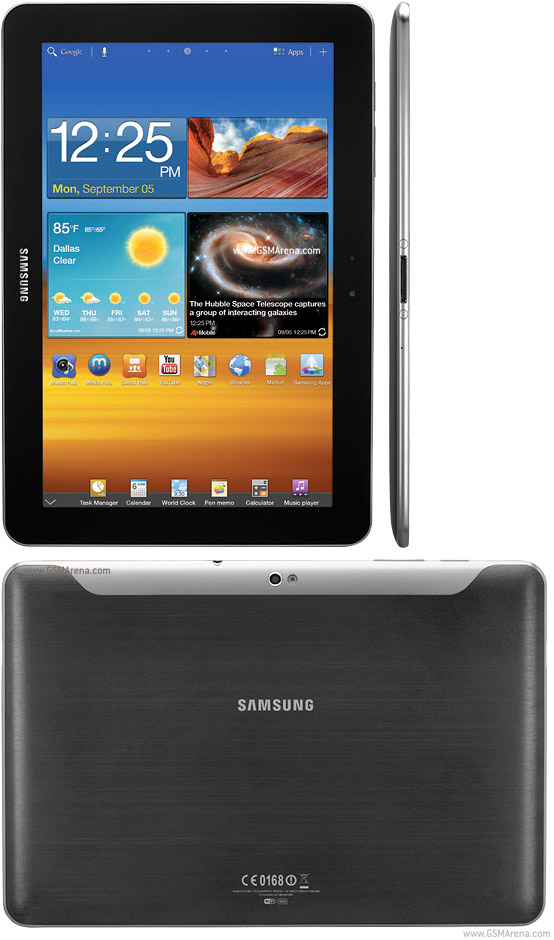
Galaxy Tab 8.9


Screen Shot 2011-11-28 at 6.33.53 PM
Short Version
The Galaxy Tab 8.9 is a nearly perfect size and weight and, thanks to a few user experience updates, it is an excellent vehicle for Android Honeycomb 3.2. In many cases the dreaded Android lag is gone and 8.9 screen size is, like the Baby Bear’s porridge, just right.
Features:
  • 8.9-inch screen
  • Android Honeycomb 3.2
  • 16GB storage
  • Front and rear cameras
  • $479 with free phone
Pros:
  • Thin and light
  • TouchWiz UI Improves Honeycomb
  • 9 hour battery life
Cons:
  • No expandable storage
  • $50 less than the 10.1
  • LTE version is bundled with contract

The Galaxy Tab 8.9, announced earlier this month, is now available on AT&T’s LTE network. This model is part of a package that comes with a Galaxy S II – probably one of the best Android phones I’ve used yet – and requires a service plan. These are the first things to consider before looking deeper into this particular device.
Purchasing considerations aside, how does this 1.5Ghz Qualcomm MSM8660 dual-core device perform? I’m happy to report that it runs quite admirably, hitting 9 hours of battery life on a single charge and acceptable performance on AT&T’s LTE and 4G networks.

What Is It?
The device has, as the name implies, an 8.9-inch screen and is amazingly thin and light. At 15.8 ounces it is one ounce heavier than the Kindle Fire and much lighter than the 22 oz iPad 2. The screen, a 1,280×800 pixel 16:9 PLS TFT LCD, is bright and the touchscreen responsive and this is probably the first Android tablet that felt “fluid” in terms of user experience and app speed.
There is no removable storage and you get about 12GB available for your own media. It has a front 2-megapixel camera and a rear 3-megapixel camera with auto-focus. The shots, as expected, are not Ansel Adams quality but, in their own way, acceptable.
There is a power button on the top left, audio controls next to that button, and a headphone jack. There is a small SIM card slot on the right top edge and two speakers on the bottom that offer slightly muffled audio, especially when the device is laid along its bottom edge (the part where the Samsung logo is embossed).
The Good
The device does everything acceptably well. Video playback is smooth and it supports 3GP, MP4, AVI, WMV, FLV, and MKV playback as well as your standard audio files. I gave it a quick Netflix playback test and got about 5 hours of straight streaming – two movies worth – before the battery was catastrophically low. On board playback sees about 8 hours although your milage may vary.
As for the screen size, I quite like it. It’s thin, light, and the screen is bright and readable. It was fine outdoors, but it’s obviously not ideal for outdoor use. It makes an excellent e-reader, as well, especially since it is lighter than many similarly-priced tablets.
The TouchWiz UI adds little in the way of improvement to the standard Honeycomb experience but it does add a few simple tools that make the tablet easier to use. For example, there is a small arrow along the bottom edge that brings up a set of widgets like Calendar, Task Manager, and Calculator. These open as modal windows over the actual apps running in the background and allow for easier multi-tasking.
In the end the 8.9 reminds me, in a good way, of the old single-purpose PMPs of yore. It does quite a bit right and not much wrong and is an interesting and useful bedside, travel, and couch-surfing companion.
The Bad
First, this device is completely self-contained and does not support battery swapping or the addition of storage. Although you get a healthy 9 hours out of it.
Another software problem I experienced was the failure for many Youtube video to load in the standalone app. The player would load a few seconds and then repeat.
Other than that, there was little to disuade me from recommending this device, let alone reviewing it. You’re obviously going to be stuck with AT&T if you pick this up and you’re best served by living in a location with LTE access, but that’s the price you pay for progress.
If this were the Wi-Fi only model I’d find even more to love. The 16GB, non-AT&T version costs $399 and the 32GB is $549.
Bottom Line
I believe that there is such a thing as tablet fatigue and that it set in once the run up to the Motorola Xoom left everyone panting at CES last year. We don’t review a lot of Android tablets simply because we find many of them derivative at best. However, I believe that this device does its best to avoid the pitfall of fatigue. It is uniquely-sized, surprisingly responsive, and well-made. Purists will complain about the lack of removable storage and the overall pricing scheme because, if you’ll remember, this model comes bundled with a phone, the highly capable Galaxy S II.
You’re obviously going to have to compare this device with the Gal Tab 10 (and any smaller member of the Gal Tab family) as well as the cavalcade of Android devices out there. However, in looking at many devices over the past few months – including tablets of various stripes, both Android and Win7, and some lesser devices in the low $100s – I find this one to be superior to most. I feel that this is a strong, capable device that, if you’re looking to upgrade on AT&T, obviously, can make for a usable and exciting tablet.

LinkWithin

Related Posts with Thumbnails